
Sharing Standard Templates for NetXMS
-
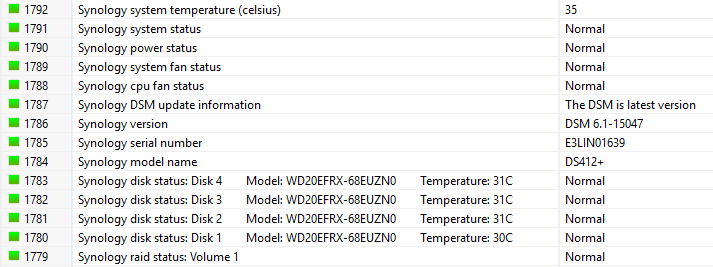
Next template is for synology nases out there

TODO: Find a way to show disk usage on ex. Volume 1
-
Hello,
I tried to use HP.xml for Import from Hanfelt (Post April 06, 2017).
* HP.xml (78.52 kB - downloaded 23 times.)The Import ends with error:
Cannot import configuration: Configuration cannot be imported because of validation errors
How can I import the XML-File?
I use version 2.1-RC1
Thank you

-
-
Hi,
download XML file to your workstation and choose Tools -> Import configuration from main menu, then choose XML file to import.
Best regards,
Victor -
Going through our SNMP based templates right now and will be posting a few over the next few days (once I clean them up a bit by removing our custom events, thresholds and stuff).
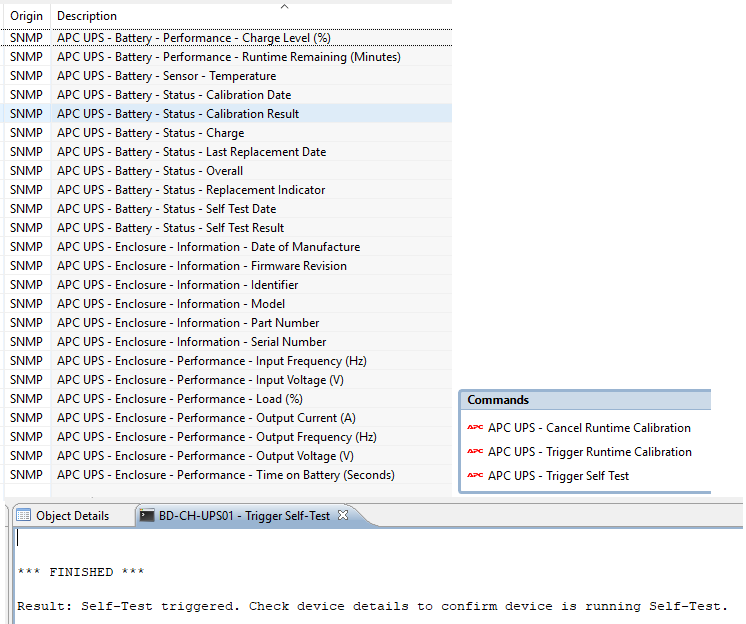
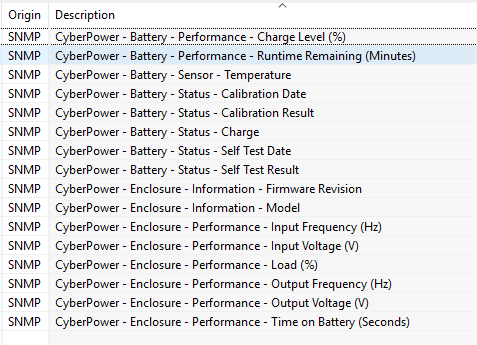
APC, CyberPower & Eaton UPS
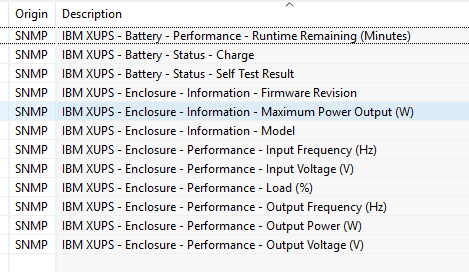
Starting with APC, CyberPower and Eaton XUPS.
Especially APC has probably been done to death, so I'm throwing in our Object Tool for APC UPS which allows triggering a Self-Test or Runtime Calibration directly from within NetXMS (SNMP Write access to UPS is required).
For the Eaton template, we only have a single IBM XUPS (which uses Eaton), so the auto-bind script is extremely limited as I have no other examples. If anyone has more of those devices it might be an idea to update the template accordingly.
-
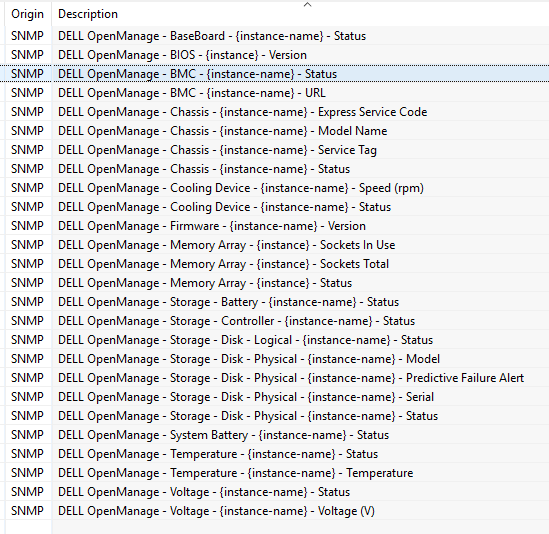
DELL OpenManage SNMP template
Applies to:
- Systems with Object ID .1.3.6.1.4.1.8072.3.2.10 (i.e. reporting as "Linux") and a valid entry for .1.3.6.1.4.1.674.10892.1.300.80.1.2.1.1 (DELL -> BaseBoard -> Chassis -> BaseBoard Index)
- Windows systems with "Dell OpenManage Systems Management" or "Dell EMC OpenManage Systems Management" software installed
Requirements for Windows:
- Windows SNMP service needs to be installed before DELL OpenManage. Otherwise you'll be missing the SNMP agents.
We don't have a lot of DELL systems and none with Linux, so can't comment on the requirements here.
-
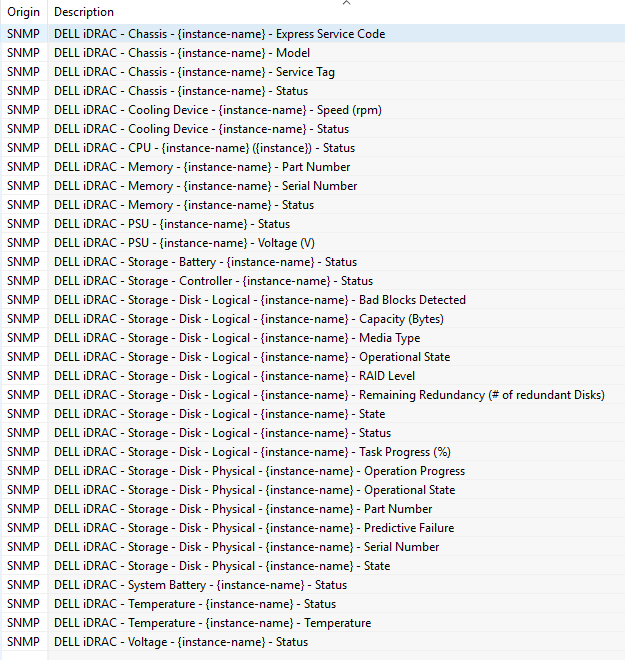
DELL iDRAC SNMP template
Applies to:
- Systems with Object ID .1.3.6.1.4.1.674.10892.5
There is obviously quite an overlap with the OpenManage template, but the OIDs are in different parts of the tree. One is for the agents that are installed on a system, the other for the out of band management card.
-
Great work Tursiops - fantastic contributions!!
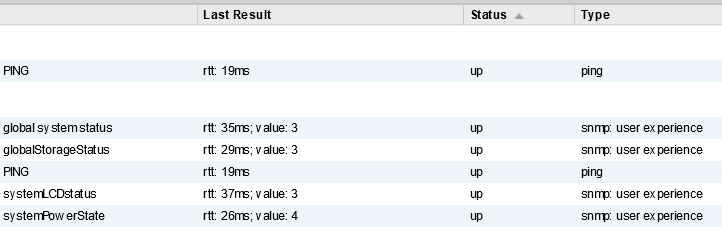
DRAC is on my list as we have a couple of hundred of them scattered around. As many have links about as fast as a tin can and some string, we were judicious in what we monitored. Funny thing - again - we pick things not included normally such as LCD status - our global OK / NOTOK item.
Will also end up with a Xen and Centos applicable template once I get around to the Dells.
-
Well - here is the first cut of my Windows generic template. it includes the events that are triggered.
For explanation of the thresholds that apply in this template, they are implemented as per here:
https://www.netxms.org/forum/general-support/simple-question-cdm-monitoring-using-snmp-anybody-doing-this/msg25843/#msg25843
-
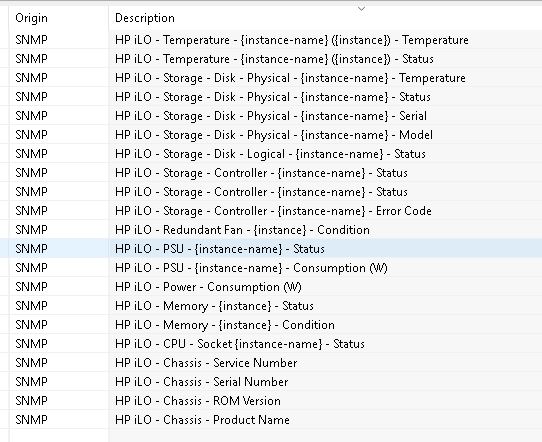
HP iLO SNMP Template
Applies to:
- Systems with Object ID .1.3.6.1.4.1.232.9.4.10
- Windows Systems with "HP Insight Management Agents" or "HPE Insight Management Agents" installed.
Requirements for Windows:
- Windows SNMP service needs to be installed before the Insight Management Agents. Otherwise you'll be missing the SNMP agents.
-
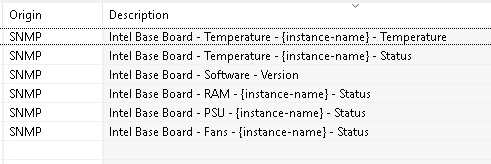
Intel SNMP Sub-Agent for Intel Server Boards
Applies to:
- Windows Systems with "Intel(R) Server Management SNMP Subagent" installed.
Requirements for Windows:
- Windows SNMP service needs to be installed before the Intel SNMP Subagent.
-
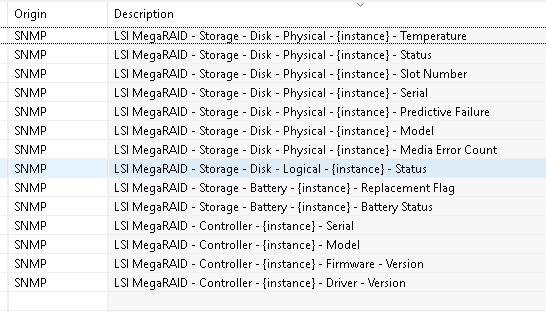
LSI MegaRAID SNMP Template (and rebranded versions of it)
Applies to:
- Windows Systems with a variation of "RAID Web Console" or "MegaRAID StorageManager" installed.
Requirements for Windows:
- Windows SNMP service needs to be installed prior to installing the Console.
-
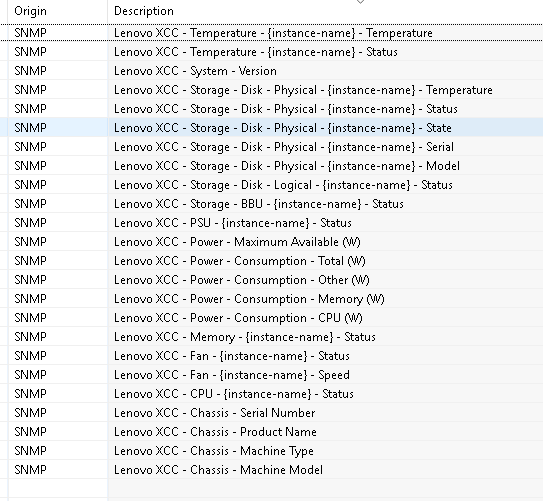
Lenovo XClarity SNMP Template
Applies to:
- Systems with SNMP Object ID of .1.3.6.1.4.1.19046.11.1
-
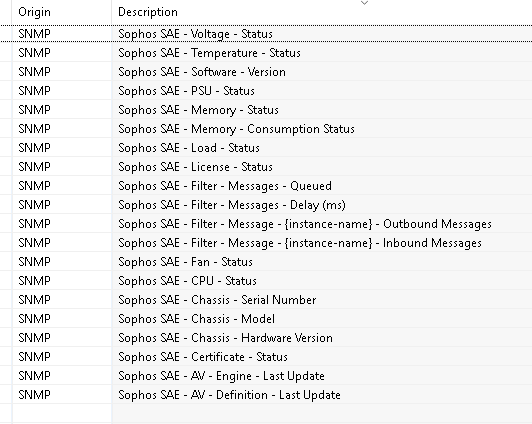
Sophos Email Appliance SNMP Template
Applies to:
- Systems with SNMP Object ID of .1.3.6.1.4.1.2604 and an existing SNMP OID of .1.3.6.1.4.1.2604.2.1.1.2 which is not null.
Potential Issue:
On the system we monitor, the In-/Outbound Message counters seem to reset once a day, always at the same time, leading to nonsense values. A transform script was added to ignore such values. Depending on your email load, this may need to be adjusted (or a different solution found).
-
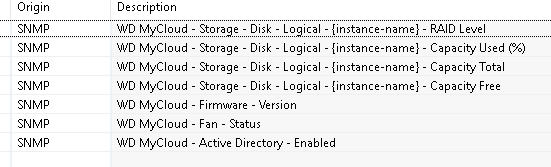
WD MyCloud SNMP Template
Applies to:
- Systems with SNMP Object ID of .1.3.6.1.4.1.5127.1.1.1.2
Note:
- The Capacity Used % is a scripted DCI, the device itself does not provide a direct % for alerting. The DCI does not rely on the Total and Free DCIs, but collects both values independently via SNMP. If you have a range of these devices, it's probably worth changing the script.
-
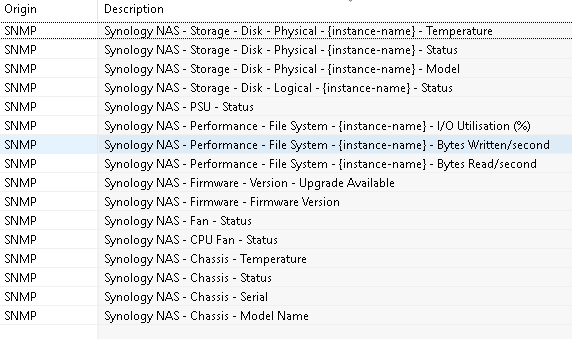
Synology NAS SNMP Template
Applies to:
- Systems with SNMP Object ID matching .1.3.6.1.4.1.8072.* and a valid response for SNMP OID .1.3.6.1.4.1.6574.1.5.1.0.
-
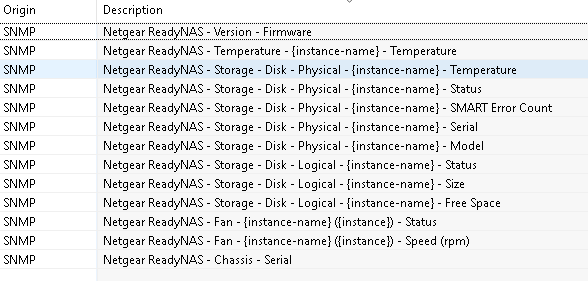
Netgear ReadyNAS SNMP Template
Applies to:
- Systems with SNMP Object ID matching .1.3.6.1.4.1.4526.100.16.* or System Description matching "ReadyDATA OS".
-
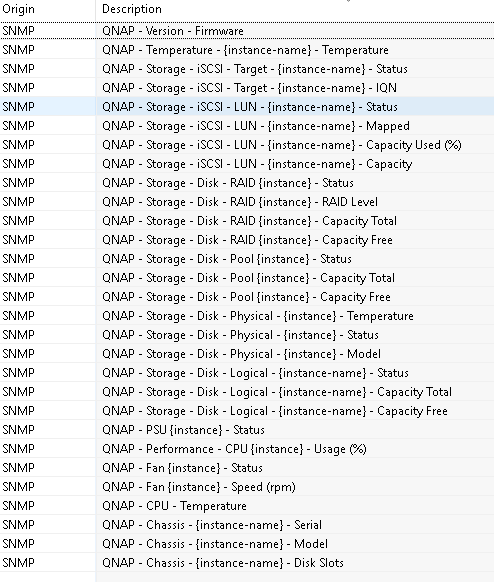
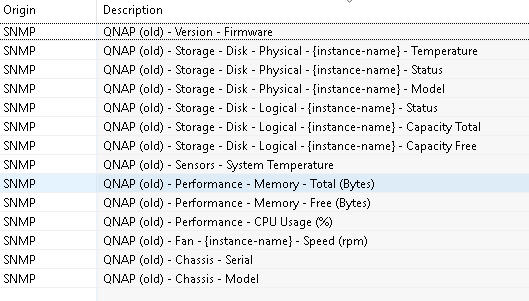
QNAP NAS SNMP Template
Applies to:
- Systems with SNMP Object ID matching .1.3.6.1.4.1.24681.* and a valid response for SNMP OID .1.3.6.1.4.1.24681.1.4.1.1.1.1.4.2.0. (QNAP NAS Template)
- Systems with SNMP Object ID matching .1.3.6.1.4.1.24681.* and no valid response for SNMP OID .1.3.6.1.4.1.24681.1.4.1.1.1.1.4.2.0. (QNAP NAS (old) Template)
Notes:
I am unsure at which firmware version the new MIB kicked in. It also appears some older models even with the latest firmware are still using the old MIB. The extra check for the OID above seems to work well for identification though.Also attached a separate template with three QNAP SNMP Traps (QNAP appears to simply send Inform/Warning/Error traps with different messages) and matching events.

-
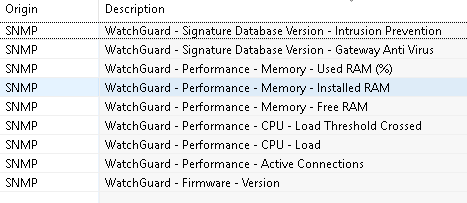
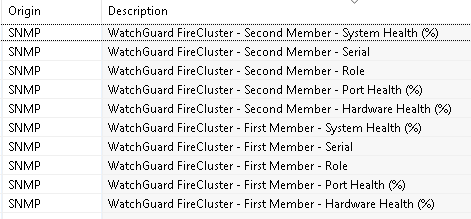
WatchGuard Firewall SNMP Template
Applies to:
- Systems with SNMP Object ID matching .1.3.6.1.4.1.3097.* (WatchGuard Template)
- Systems with SNMP Object ID matching .1.3.6.1.4.1.3097.* and a valid response for SNMP OID .1.3.6.1.4.1.3097.6.6.1.0 (WatchGuard FireCluster Template)
Note:
- The Used RAM % is a scripted DCI, the device itself does not provide a direct % for alerting. The DCI does not rely on the Installed/Free RAM DCIs, but collects both values independently via SNMP. If you have a range of these devices, it's probably worth changing the script.
Also attached a separate template with a simple SNMP Trap for Alerts triggered by WatchGuards. Every alert triggers the same trap.
Configuring alerts via SNMP Traps is a bit of a pain in Watchguards, as you need to enable SNMP, configure the destination and enable alerts in every little service/proxy/whatever you might want to get alerts for..
-
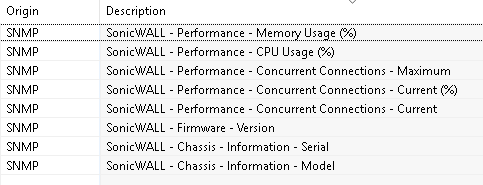
SonicWALL SNMP Template
Applies to:
- Systems with SNMP Object ID .1.3.6.1.4.1.8741.1
Note:
- The Concurrent Connections % is a scripted DCI, the device itself does not provide a direct % for alerting. The DCI does not rely on the Maximum and Current DCIs, but collects both values independently via SNMP. If you have a range of these devices, it's probably worth changing the script.
Hello! It looks like you're interested in this conversation, but you don't have an account yet.
Getting fed up of having to scroll through the same posts each visit? When you register for an account, you'll always come back to exactly where you were before, and choose to be notified of new replies (either via email, or push notification). You'll also be able to save bookmarks and upvote posts to show your appreciation to other community members.
With your input, this post could be even better 💗
Register Login